
The brain behind artificial intelligence

What is artificial intelligence?
Artificial intelligence is the ability of a machine to learn and behave like a human, possessing characteristics such as reasoning, learning, creativity, and the ability to plan. There are fields in computer science that study and develop systems capable of performing tasks that require human intelligence, such as pattern recognition, problem-solving, vehicle driving, fraud detection in banking, etc. Given the various sensors, devices, and technologies currently available, technological development has advanced enormously in this area in recent years, although the concept dates back to 1956 when a group of scientists initiated the research project "Artificial Intelligence" at Dartmouth College in the United States _(Salesforce BLOG, 2017)_.
Four approaches to artificial intelligence:
Depending on the type of artificial intelligence, the approach to understanding it varies, as those who design it take different approaches to achieve the goal of creating a machine capable of learning or behaving like a human. While there are various conceptions on the subject, the classification by Stuart J. Russell and Peter Norvig will be presented below; the complete book can be found in the references section, and I also provide more material of interest for you to delve deeper into the topic.
Systems that think like humans: This approach strives to create systems that think like humans, meaning they can reason and plan. They are machines linked to human thought processes, such as decision-making, problem-solving, planning, etc. Neural networks are an example of this type of system.
Systems that think rationally: These are systems that involve a combination of mathematics and engineering through the use of computational models. The aim is to emulate reasoning, investigating how to enable machines to perceive, reason, and make decisions.
Systems that act like humans: The effort to develop machines capable of performing tasks that require human intelligence, such as pattern recognition, learning, problem-solving, etc. An example of this type of system is robots.
Systems that act rationally: These are systems related to intelligent behavior. Similarly, the goal is to emulate human reasoning at the behavioral level, meaning that machines are sought to act rationally.
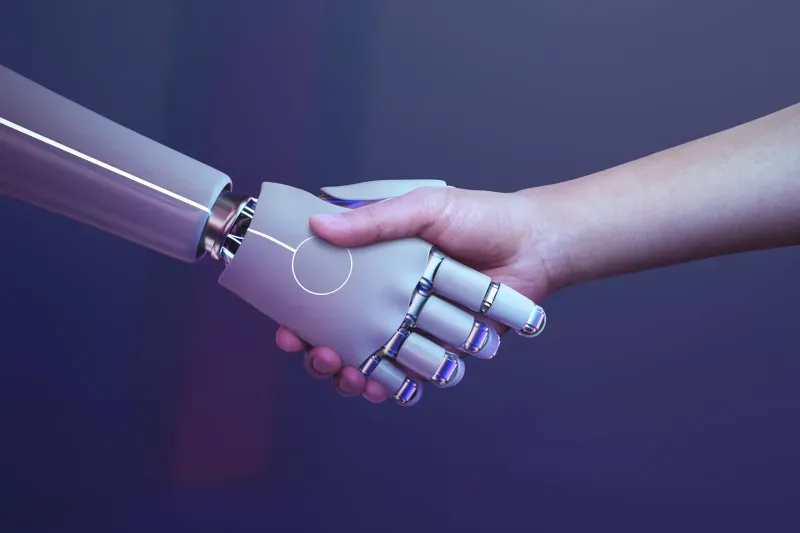
How does the human brain work?
The human brain is a complex organ responsible for processing information received from the environment and responding to the needs of the organism. It controls vital functions such as bodily movement, sensory perception, and pain perception. Nerve fibers stretch between the brain and the spinal cord, transmitting signals between the brain and the spinal cord and vice versa.
While the human brain is a complex organ, it can be divided into three main parts: the cerebrum, the cerebellum, and the brainstem. The cerebrum is the largest part of the brain, responsible for processing information received from the environment and responding to the needs of the organism. The cerebellum controls bodily movement, sensory perception, and pain perception. The brainstem processes information received from the brain and spinal cord and vice versa.
Similarities between the human brain and machines:
Both conscious and unconscious processes of the cortex can be thought of as computational processes of varying priority controlled by different sets of computers with different functions. Sensory information, previously processed by the FEP ("Front End Processor"), reaches the three major processing cores. In one, an image of reality is generated; in another, information is temporarily stored in a "cache" (the amygdala) while it is processed and attempts are made to define new concepts and store them (the hippocampus) _(Martínez and Fornaguera, 1998)_. While the above is an analogy, it is not far from reality, as the human brain is capable of processing information similarly to a computer, so it can be considered that the human brain is an information processing machine.
Surprising things about AI... It's just the beginning.
It is now common to see in the news that software has been created that can recognize objects or that can speak and respond like a human. It is also common to see on Instagram or TikTok reels where a text is input into software that generates an image or an article from scratch. In the field of health, algorithms have already been developed that can detect diseases such as breast cancer or detect anomalies in the heart, etc. In the case of Alzheimer's, the greatest challenge is achieving early diagnosis and slowing its progression. In this regard, a team led by Marianna La Rocca, a physicist at the University of Bari in Italy, developed a machine learning algorithm capable of discerning structural changes in the brain caused by Alzheimer's ((BBVA OPENMIND, 2018))[#References]. The number of applications that can be performed with AI is increasing, and more companies are joining this trend, as AI is capable of performing tasks that were previously impossible.
In the coming decades, with improved and more interconnected computing devices, even more notable paradigm shifts are expected in the relationship between AI and humans. The capacity for computation and data is continually increasing, along with the learning capacity of AI. In the future, AI may be capable of performing tasks that were previously impossible, such as creating art, generating music, writing texts, etc. Even in general terms, many studies support the interesting possibility that there are quantifiable similarities between the brain and AI models, which can help us better understand the functioning of the human brain.
References
- Stuart J. Russell and Peter Norvig. (2004). Artificial Intelligence: A Modern Approach
- Threepoints. (2022). What are the types of artificial intelligence that exist?
- PABLO. Orange.es (2021). There is more than one artificial intelligence.
- Kellison Ferreira. (2020). Types of Artificial Intelligence: Know which ones exist and how to use them.
- Salesforce BLOG. (2017). Artificial Intelligence: What is it?.
- Adrián Triglia. (2016). Parts of the human brain (and functions).
- Ing. Alexander Martínez and Jaime Fornaguera Ph. D. (1998). Computational analogy of the brain and the mind.
- Forbes Magazine (2022). Artificial Intelligence and the human brain: seeking for AI to think and reason like a person.
- BBVA OPENMIND. (2018). Artificial intelligence hacks the human brain.