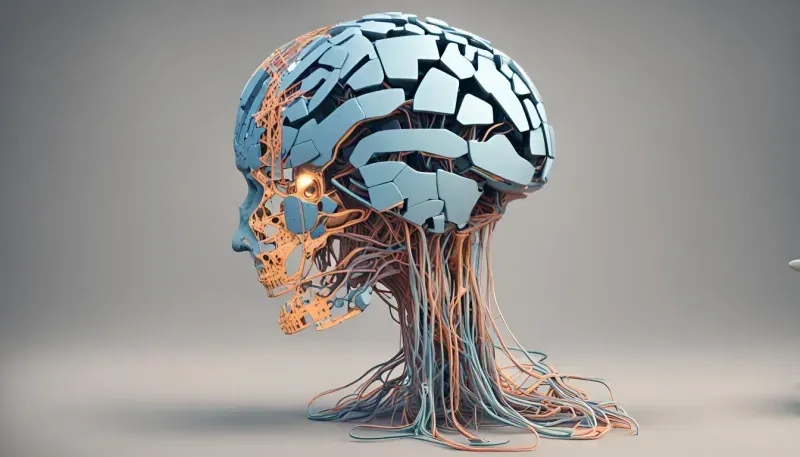
Programming as Reasoning in AI: The Language of Artificial Thought

How Code Powers Reasoning in Large Language Models
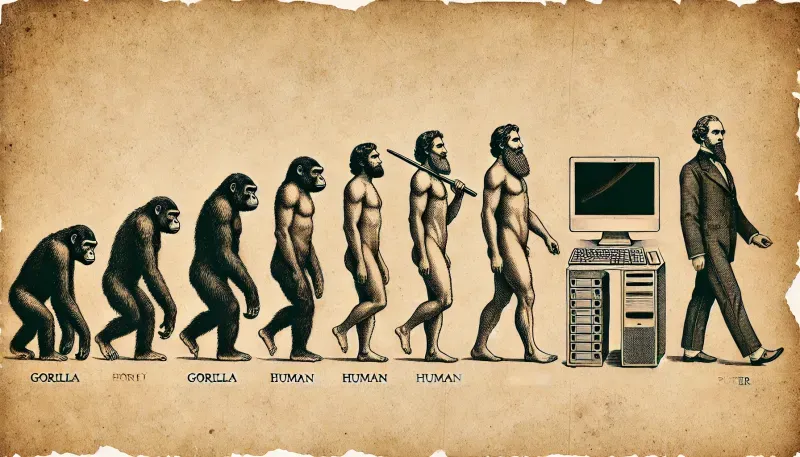 The integration of code has transformed LLMs from simple text processors to complex reasoning systems
The Silent Revolution: Code at the Core of LLMs
Current large language models (LLMs) have undergone a fundamental transformation thanks to the incorporation of code in their training. Unlike traditional models that only processed text, modern LLMs understand and utilize code as an integral part of their functioning. This capability is not just a technical add-on, but a revolution in how these systems "think" and solve problems.
Why Does Code Make a Difference?
Code, unlike natural language, possesses unique characteristics that make it especially valuable for reasoning:
Precision and Unambiguity
- Code has strict syntax and precise meanings
- Each instruction has a clear and defined purpose
- There is no room for multiple interpretations as in natural language
Inherent Logical Structure
- Natural hierarchical organization
- Explicit control flow
- Clearly defined cause-and-effect relationships
 A robot writing on a computer
Transformation of Reasoning in LLMs
1. From Chains of Thought to Programs of Thought
LLMs trained with code have evolved from using simple chains of thought to implementing programs of thought. This evolution represents a qualitative leap in their reasoning capability.
Traditional Chain of Thought:
Problem: Calculate the total area of two circles with radii 3 and 4
Thought 1: I need the formula for the area of a circle (πr²)
Thought 2: For the first circle: 3² × π
Thought 3: For the second circle: 4² × π
Thought 4: Sum both areas
Improved Program of Thought:
def calculate_circle_areas(r1, r2):
    import math
    area1 = math.pi * r1**2
    area2 = math.pi * r2**2
    return area1 + area2

result = calculate_circle_areas(3, 4)
The difference is crucial: the program not only describes the steps but makes them executable and verifiable.
2. Enhanced Knowledge Structures
LLMs can represent and manipulate knowledge in a more structured way
LLMs trained with code have developed a superior ability to:
Organize Information
PYTHONclass MathematicalConcept: def __init__(self, name, definition, examples, applications): self.name = name self.definition = definition self.examples = examples self.applications = applicationsEstablish Relationships
- Clear hierarchies between concepts
- Verifiable logical connections
- Explicit dependencies
3. Integration with the Real World
Code allows LLMs to interact with a wide range of tools and systems
Modern LLMs can:
Connect with External APIs
PYTHONdef get_weather(city): response = api.weather.get(city) return process_response(response)Manipulate Multimodal Data
- Image processing
- Audio analysis
- Video manipulation
4. Automatic Feedback Loops
Code execution allows for continuous learning based on results
Code enables:
Immediate Verification
PYTHONdef verify_solution(problem, solution): result = execute_solution(solution) return validate_result(result, problem.criteria)Iterative Learning
- Automatic error detection
- Optimization based on results
- Continuous performance improvement
Revolutionary Practical Applications
1. Solving Complex Problems
LLMs can now:
- Decompose problems into manageable subproblems
- Verify each step of the solution
- Ensure the accuracy of results
2. Assistance in Specialized Tasks
Practical examples:
- Advanced mathematical analysis
- Scientific data processing
- Automation of complex tasks
Challenges and Future
Current Challenges
Resource Optimization
- Efficient memory management
- Processing time
- Scalability
Accuracy and Reliability
- Result validation
- Handling edge cases
- Consistency in responses
Future Perspectives
The future promises:
- Deeper integration of programming paradigms
- Better understanding of code-based reasoning
- New applications in specialized fields
Conclusion
The integration of code in LLMs represents much more than a technical improvement; it is a fundamental transformation in how these systems understand and solve problems. This evolution brings us closer to AI systems truly capable of complex reasoning and advanced problem-solving.